A Practical Framework for Identifying Worthwhile AI Use Cases
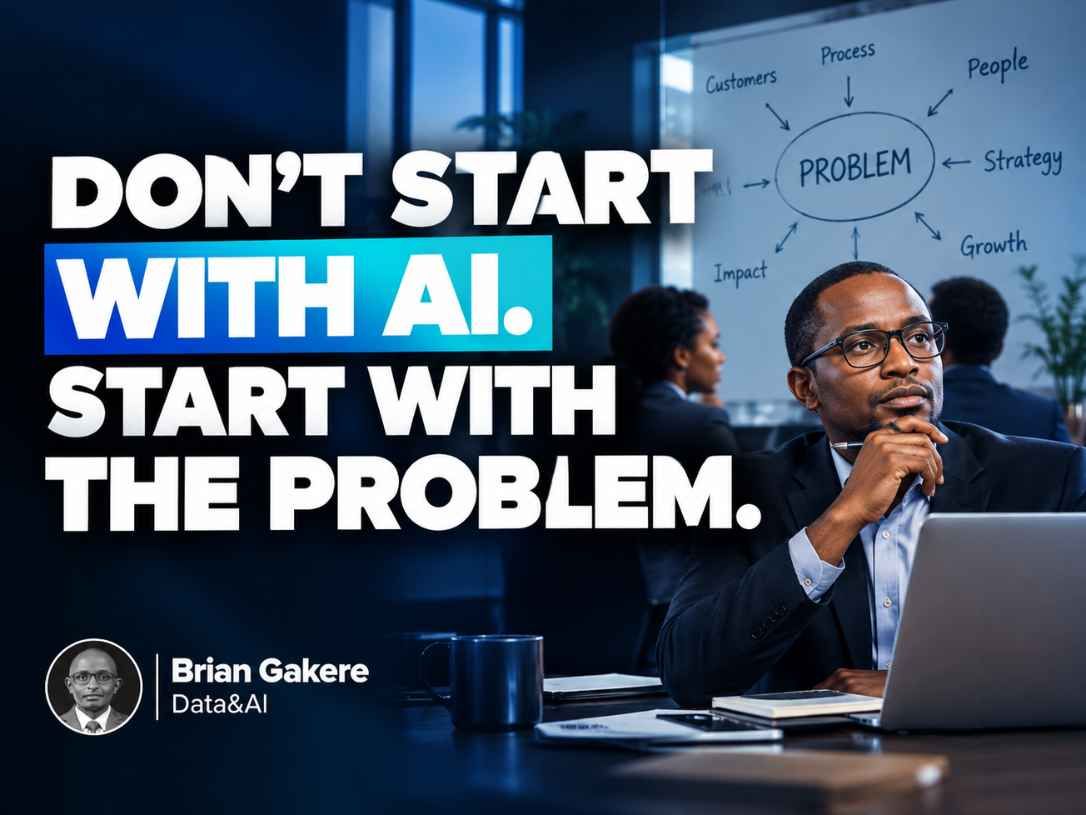
One of the easiest mistakes businesses make with AI is starting with the technology.
You see a new AI tool and ask:
“How can we use this?”
A better question is:
“What problem do we have that AI might help solve?”
Here is a simple framework.
1. Find the problem
Look at how your team actually works.
What tasks are repetitive? What takes too much time? What involves searching, summarizing, classifying or generating information?
Start there.
2. Understand the problem
Do not jump straight to:
“Let's build an AI chatbot.”
First ask:
- Who has the problem?
- How often does it happen?
- How much time or money does it cost?
- What happens if we don't solve it?
A clear problem is more useful than an exciting AI idea.
3. Ask if AI is necessary
AI isn't automatically the best solution.
Could better processes solve the problem?
Could simple software solve it?
Could better search or automation solve it?
Consider different options and choose the simplest solution that actually works.
4. Talk to the people affected
Don't assume you know what users want.
Talk to them.
Understand what they actually care about and what success would look like for them.
Sometimes the problem you think you're solving isn't the problem they actually have.
5. Start small and measure
Don't build a huge AI system immediately.
Test a small version with real users.
Then ask:
Does this actually help?
Define your measure of success before you start.
It could be time saved, fewer errors, better customer satisfaction or something else that matters to the user.
6. Find where it fails
If it doesn't work, don't simply conclude that AI doesn't work.
Break the problem down.
Where exactly is it failing?
Is it the model?
The data?
The workflow?
Or are users simply not interested in using it?
Find the specific problem before changing the technology.
The simple test
Before adopting AI, ask:
What problem are we solving?
Who has the problem?
Does AI actually make the solution better?
How will we test it?
How will we know it worked?
If you can't answer these questions, you may not have an AI use case yet.
You may simply have an interesting technology looking for a problem.
Don't start with AI. Start with the problem.