Should Your Child Use ChatGPT for Homework? A Practical Guide for Parents
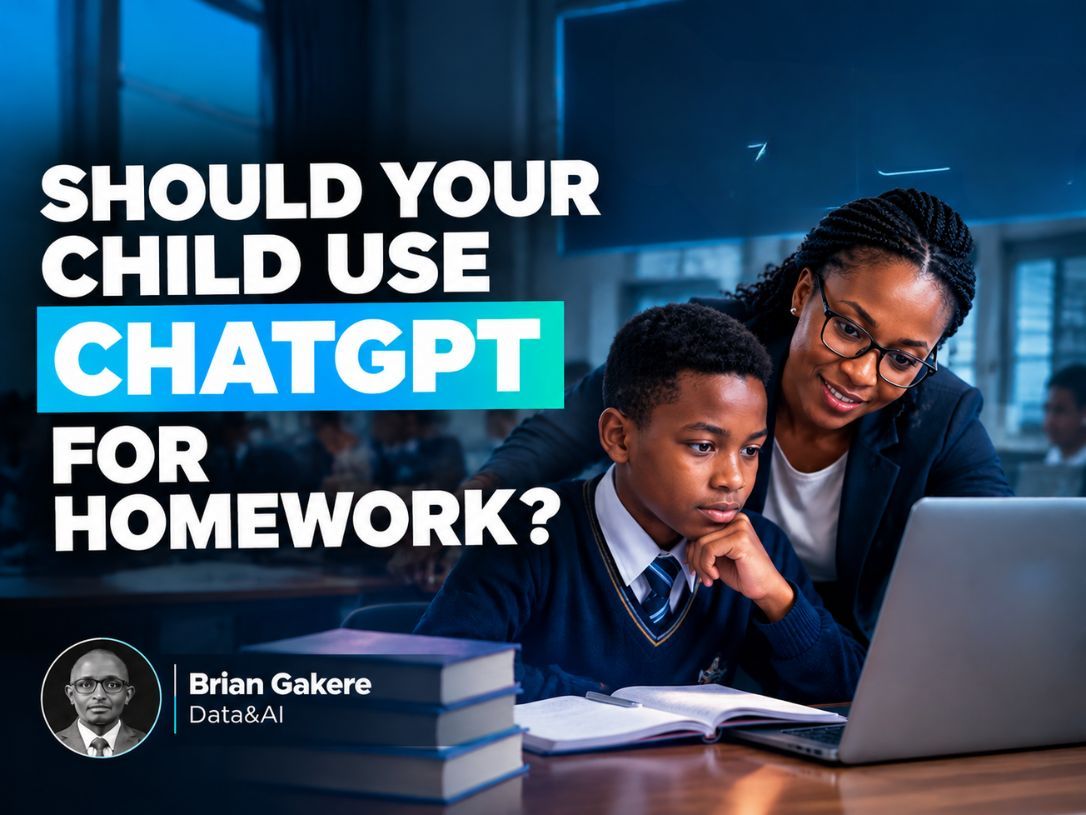
If your child comes home with homework today, there is a good chance they can turn to ChatGPT for help. They can ask it to explain a difficult maths problem, summarize a chapter, write an essay, or answer questions they don't understand.
As a parent, you might find yourself asking: Should I allow my child to use ChatGPT for homework, or should I keep them away from it?
I think the answer is not simply to allow or ban it. The real question is whether your child is using AI to learn or using it to avoid learning.
Let Your Child Try Before Turning to AI
One of the biggest risks of using ChatGPT for homework is that children may become dependent on it before developing their own problem-solving skills. Imagine your child is given a mathematics problem. Instead of attempting it, they immediately copy the question into ChatGPT and submit the answer. They may finish their homework, but have they actually learned anything?
A better approach is to encourage your child to attempt the problem first. Let them read the question, think about it, and try to solve it. If they get stuck, they can use ChatGPT to understand the concept or explore a different approach. The goal is not to make learning unnecessarily difficult. It is to ensure that AI supports the learning process rather than replacing it.
Use ChatGPT as a Tutor, Not a Homework Machine
There is a big difference between asking ChatGPT to complete an assignment and asking it to help you understand the assignment.
For example, instead of asking ChatGPT to write an essay about environmental conservation, your child could ask it to explain the topic in simple terms and suggest three points they could discuss. When struggling with mathematics, they could ask it to explain how to solve a particular type of problem step by step without giving away the final answer.
These approaches encourage children to engage with the subject. Parents can teach their children to use AI to explain difficult concepts, provide practice questions, offer feedback on their work, and identify areas they need to improve. The objective is for the child to understand the answer, not merely possess it.
Teach Them to Question AI's Answers
ChatGPT can produce answers that sound convincing but contain mistakes. This is particularly important for children who may assume that a computer-generated answer must be correct.
Encourage your child to ask whether an answer is correct, how it can be verified, what evidence supports it, and whether it agrees with what their teacher taught. If ChatGPT provides information for a research assignment, encourage them to check reliable books, class notes, and trustworthy sources rather than simply copying the response.
This habit develops critical thinking and helps children understand that AI is a tool, not an unquestionable authority. In an AI-powered world, knowing how to question information may be just as important as knowing how to find it.
Make Sure Your Child Can Explain Their Work
One simple way to tell whether your child has learned something is to ask them to explain it. After completing an assignment, ask, "Can you explain how you arrived at this answer?" or "What did you learn from this question?"
If your child can explain the concept in their own words, that is a useful indication of understanding. If they cannot explain the work, help them revisit the topic rather than simply accepting the completed assignment.
This is particularly important for essays, mathematics, science projects, and research assignments. The goal is not to catch children using AI. It is to help them develop genuine understanding.
Set Clear Rules for Using AI at Home
Children need guidance on when and how to use ChatGPT. Parents don't need complicated rules, but they should establish clear expectations. Encourage your child to attempt homework independently before asking AI for help, use AI for explanations and feedback rather than completed assignments, and verify important information instead of assuming everything ChatGPT says is true.
It is also important to teach honesty. Children should follow their teachers' instructions about AI use and disclose AI assistance when required. They should understand that sharing private details, passwords, school records, or sensitive family information with AI tools is not appropriate.
These boundaries help children develop responsible habits while still benefiting from the technology.
Remember That Children Still Need to Learn Without AI
AI can be useful, but children also need opportunities to think independently. They need to practise writing, reading, calculating, remembering, reasoning, and solving problems without always relying on assistance.
A child who uses ChatGPT for every difficult task may miss opportunities to develop these foundational skills. Parents can encourage a healthy balance by allowing children to complete some tasks independently, struggle productively with difficult concepts, and engage in reading, writing, discussions, and practical activities away from screens.
AI should expand what children can learn, not become the only way they learn.
So, Should Your Child Use ChatGPT for Homework?
I believe parents should approach ChatGPT as a learning tool that requires guidance, not something that automatically needs to be banned or used for every assignment.
When used thoughtfully, it can help children understand difficult concepts, explore ideas, practise skills, and receive feedback. But when it simply produces answers that children copy without understanding, it can undermine the very purpose of homework.
As parents, we do not need to know every AI tool or understand how every model works. We need to help our children develop good habits around technology. Teach them to attempt problems, ask better questions, verify answers, think independently, and take responsibility for their learning.
Because the real measure of homework is not how quickly a child completes it.
It is how much the child learns from doing it.