The AI Classroom: What Should Teachers Teach When Students Have ChatGPT?
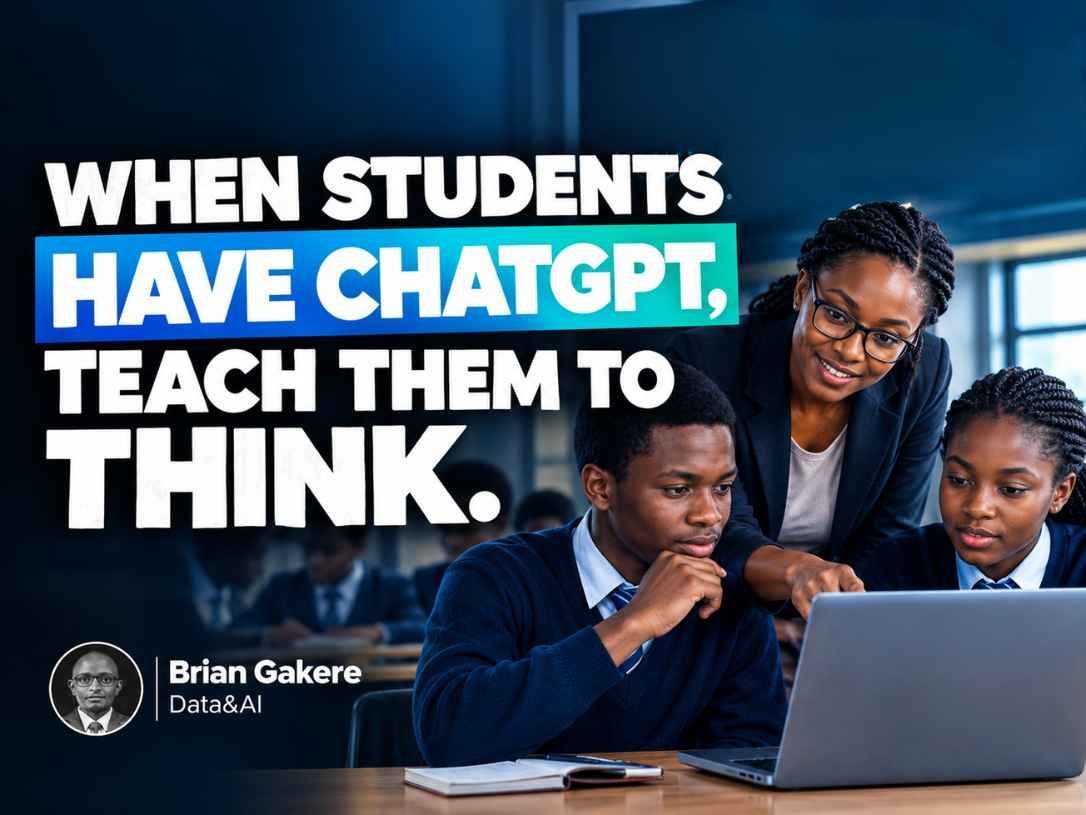
A student can now ask ChatGPT to explain a difficult concept, write an essay, solve a maths problem, summarize a book, or generate ideas in seconds.
So what should teachers teach when students have access to all of this?
I think the answer is not simply more information.
It is teaching students how to think, question, verify, and use AI well.
The Classroom Has Changed
For a long time, schools were built around access to information.
Teachers taught students concepts. Students studied them, memorized them, and demonstrated what they had learned through assignments and exams.
But AI changes the relationship between students and information.
A student no longer has to struggle to produce a first draft. They can ask AI to create one.
They don't have to immediately know how to solve a problem. They can ask AI for the steps.
They don't even have to know where to start. They can ask AI to suggest an approach.
That doesn't make learning unnecessary.
It changes what students need to learn.
Knowing the Answer Is No Longer Enough
If AI can produce an answer in seconds, students need to develop skills that go beyond simply finding answers.
They need to ask:
Is this answer correct?
How do I know?
What evidence supports it?
What might be missing?
Can I explain this in my own words?
These are not just AI skills.
They are thinking skills.
And they become even more important when AI can produce answers that sound convincing but are wrong.
Teachers Should Teach Students How to Question AI
Imagine a teacher gives students an AI-generated explanation of a historical event.
Instead of asking students to simply accept or reject it, the teacher could ask them to investigate it.
What claims did the AI make?
Which claims can you verify?
What sources support them?
What information did the AI leave out?
Was there another interpretation?
Now AI becomes part of the learning process rather than a shortcut around it.
The student is not simply using AI.
The student is thinking about what AI produced.
Teach Students to Use AI as a Tool
There is also a difference between asking AI to do your work and using AI to help you learn.
A student could ask:
"Write my essay for me."
Or they could ask:
"Here is my argument. Challenge it. What assumptions am I making?"
Those are very different uses of the same technology.
The first can replace thinking.
The second can stimulate thinking.
Teachers therefore have an opportunity to teach students how to use AI as a tutor, critic, brainstorming partner, explainer, or feedback tool without allowing it to replace their own judgment.
The Teacher's Role Becomes More Important, Not Less
Some people see AI and ask whether teachers will become less important.
I see a different question:
What becomes more valuable when information becomes abundant?
A teacher can help students understand context, challenge assumptions, identify weak reasoning, connect ideas, and ask better questions.
AI can generate an answer.
A teacher can ask:
"Why do you believe that answer?"
That question may become more important than the answer itself.
We Also Need to Change How We Assess Learning
If students can use AI to generate an essay at home, simply asking for an essay may no longer tell us much about what the student understands.
Assessment may need to include more activities where students have to explain their reasoning, defend their conclusions, solve problems in unfamiliar situations, discuss their work, critique AI-generated answers, or demonstrate what they learned without relying entirely on AI.
The goal shouldn't be to create assessments that are impossible for AI to complete.
The goal should be to create learning experiences where the student's thinking matters.
The Question Is Not "How Do We Stop Students Using AI?"
AI is already becoming part of how students search for information, learn concepts, write, and solve problems.
The more useful question is:
How do we teach students to use it responsibly and intelligently?
Students will need to know how to work with AI.
But they will also need to know when not to trust it.
They will need to know how to verify information.
They will need to recognize uncertainty.
They will need to ask better questions.
And most importantly, they will need to develop the ability to think independently.
Because the future classroom isn't one where students never use AI.
It is one where students can use AI without giving up their ability to think for themselves.